
Which Side of a Coin Is Yang?
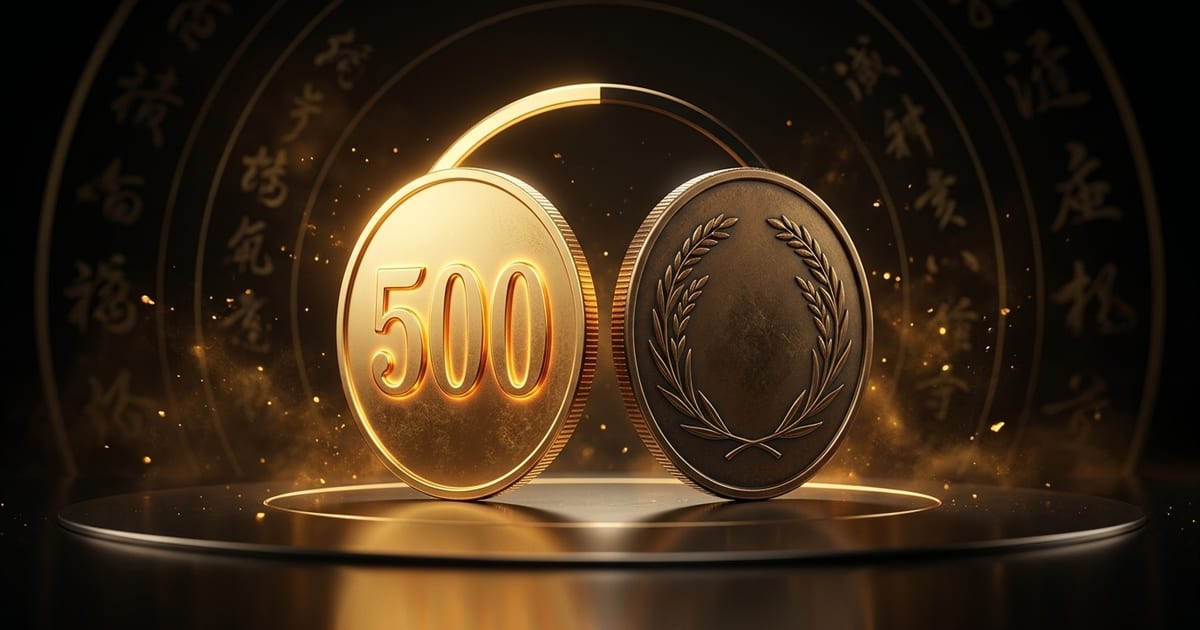
The yang side and the yin side of a coin are the two faces you must tell apart correctly before tossing three coins, because getting one face wrong throws off that line's score and skews both the primary and the derived hexagram. The most common convention, and the one used on this site, is that the yang side is the side that shows the coin's value; the other side is yin.
On a modern coin, the yang side is the face printed with the denomination, for example the "500" on a Vietnamese 500 đồng coin, or the number on any foreign coin. The yin side carries the emblem, portrait or pattern, with no amount printed on it.
Why Do Old Chinese Cash Coins Work Differently?
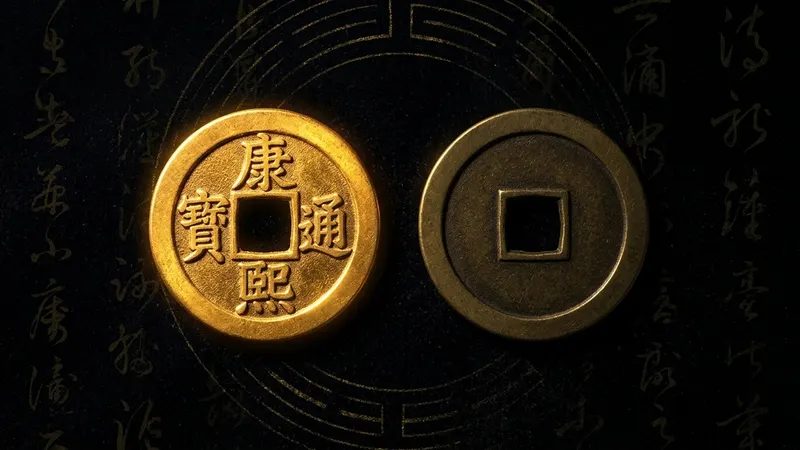
Old Chinese cash coins (round coins with a square hole in the center) carry no numeric denomination. One face is cast with four raised Chinese characters around the hole, naming the reign or the coin issue; the other face is plain, with no characters. Applying the same rule, the side that carries the coin's information and value, counts as the yang side; the plain side is the yin side.
The Record mode in the KinhDich.AkiNet.me caster shows both faces this way: a gold coin marked "500" stands for the yang side, a grey coin stands for the yin side, and the app asks how many coins landed yang for each line you cast with real coins.
Why Not Just Say Heads or Tails?
Many people default to heads and tails when tossing a coin, but that language does not fit I Ching casting because a coin has no side that is objectively "up": one person calls the number side heads, another calls the pattern side heads, and two people tossing the same coin can disagree on which face they just saw. This site uses only yang side and yin side, names tied to a fixed feature of the coin itself, the presence or absence of a printed value, not to how it happened to land or who is looking at it.
Is There a Reverse Convention?
Yes. Some I Ching sources, notably translations in the Wilhelm/Baynes tradition, use the opposite assignment: the marked side (bearing characters or a value) counts as yin, and the plain side counts as yang. Both conventions appear across published guides, and neither is universally treated as the single correct standard.
What actually matters is not which convention is right, but staying consistent: fix one convention before you start casting, and keep it for all six lines of that hexagram. Switching partway through, scoring the marked side as yang for lines 1 to 3 and as yin for lines 4 to 6, produces a hexagram that no longer reflects one coherent reading.
Why Is Yang Worth 3 Points and Yin Worth 2?
Three coins tossed together sum to a value between 6 and 9, and the 3/2 assignment is not arbitrary. In ancient Chinese numerology, odd numbers are yang and even numbers are yin; assigning 3 (odd) to the yang side and 2 (even) to the yin side makes the sum of three yin coins even (6) and the sum of three yang coins odd (9), matching the meaning of old yin and old yang. This scoring also preserves the traditional probability split: 25% moving lines and 75% static lines across the four possible sums 6, 7, 8, and 9. See the full scoring table in the three-coin casting guide.
What About Foreign Coins or Three Different Coins?
The three coins do not need to be the same currency or the same size; you only need to identify the yang side on each coin correctly before tossing. For a foreign coin, apply the same rule: the face printed with the denomination is the yang side, the other face is yin. If you mix currencies, say one Vietnamese coin and two foreign coins, each coin only needs its own yang side identified correctly; the three coins do not need to match each other.
Before You Toss: Fix the Convention, Never Decide Mid-Cast
Because one wrong face throws off the whole line, settle which side is yang on each of your three coins before the first toss, not partway through a hexagram. If you need help settling your focus first, see the guide on calming the mind before casting.
If you would rather skip physical coins, the caster at KinhDich.AkiNet.me already applies the value-side-is-yang convention described here, so you only need to press "Cast Line" six times. If you already tossed real coins and want to enter the result afterward, use Record mode and answer how many coins landed yang for each line.
Frequently Asked Questions
Which side of a Vietnamese 500 đồng coin is yang?
The face printed with "500" (the denomination) is the yang side; the face with the national emblem is the yin side. This follows the rule that the side showing the coin's value counts as yang, and it applies to any modern coin with a printed denomination.
Is my hexagram wrong if I score the sides the other way around?
No, as long as you keep one convention for all six lines of that hexagram. Both conventions, marked or value side as yang, and marked or value side as yin, appear in published sources. It only breaks the reading if you switch conventions partway through one cast.
Can I mix different coins instead of using three identical ones?
Yes. The three coins do not need to match in currency or size. What matters is identifying the yang side, the side showing the denomination, correctly on each coin before tossing; the coins themselves do not need to be identical.
Why does this site avoid the words heads and tails?
Because heads and tails depend on how the person tossing holds the coin, with no objective standard, so two people can name the same face differently. Yang side and yin side are tied to a fixed feature of the coin and do not change with the viewer.
Which side of an old Chinese cash coin is yang?
Under the common convention used on this site, the side cast with four Chinese characters around the square hole is the yang side, since it carries the coin's information and value; the plain side is yin. Some Western sources use the reverse assignment.
Why is the yang side worth 3 points instead of some other number?
Three is an odd number, matching yang in ancient Chinese numerology, while two is even, matching yin. This assignment preserves the traditional 75% static and 25% moving line ratio when the three coin values are summed, in line with the I Ching's principle of change.
Ready to cast?
Apply what you just learned with a real hexagram.